Table of Contents Show
Have you got some appealing digital books and want to make a profit from them? Check out this article to learn how to sell eBooks on Shopify and make that goal real.
In this article from NextSky, you will find simple, easy-to-follow instructions and useful tips to make your business run smoothly.
Can You Sell eBooks on Shopify?
Yes, you can sell eBooks on Shopify. The platform supports digital products and lets you sell files such as PDFs, EPUBs, guides, workbooks, templates, and other downloadable content. By adding a digital delivery app, customers automatically receive access to their files after purchase.
Many creators and businesses choose Shopify because it offers more control and flexibility than selling only on third-party marketplaces.
Key benefits include:
- Full ownership of your brand and audience – Control your store design, pricing, customer experience, and customer data for future marketing.
- Higher profit margins – No printing, inventory, storage, or shipping costs, allowing you to keep more revenue from each sale.
- Unlimited sales potential – Unlike physical products, digital files can be sold repeatedly without stock limitations.
- Built-in marketing opportunities – Connect your store with SEO, email marketing, Facebook, Instagram, TikTok, and other channels to grow traffic.
- Easy expansion – Bundle eBooks with courses, memberships, templates, or other digital products to increase revenue.
Before getting started, keep in mind that Shopify does not provide a built-in audience like some marketplaces. You'll need to drive traffic through SEO, content marketing, social media, or paid ads. You'll also need a digital delivery app to automate file fulfillment.
For creators, educators, and digital businesses, Shopify can become more than a selling platform—it can serve as the foundation for a scalable digital product business.
How to Sell eBooks on Shopify?
Selling eBooks on Shopify is relatively simple because you don't need to manage inventory, packaging, or shipping. The main setup process involves creating a product page and using a digital delivery app to automatically send files to customers after purchase.
Step 1: Install a digital delivery app
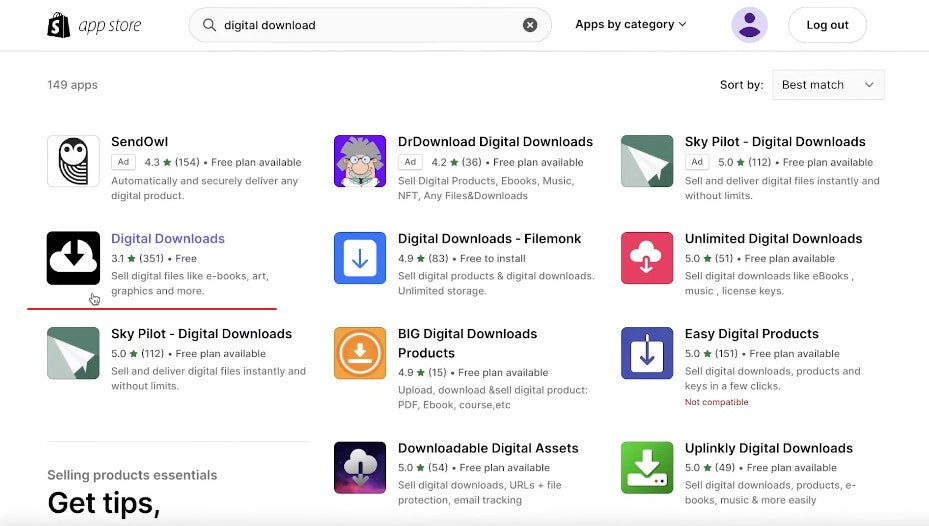
Shopify does not deliver digital files automatically, so the first step is installing a digital delivery app.
Shopify's free Digital Downloads app is a good option for beginners, while third-party apps can provide additional features like download tracking, file protection, or advanced delivery settings.
Step 2: Create a Products page and upload your eBooks
Once you've installed the Digital Downloads app in your Shopify store, you can create a product page for your eBook. Here’s a simple guide to upload an eBook on Shopify you can follow:
- Click on the “Digital Downloads” of the Apps section in your Shopify dashboard.
- Click on “Add your products.”

- A new window will open where you can fill in details like the Title, Description, and Image for your eBook.

- As the number of eBooks is unlimited, you should uncheck the “Track quantity” button in the Inventory section. Also, you need to uncheck the “Physical product” in the Shipping section as well.

- After you fill in the details, click the “Save” button to keep your changes.

- Next, click the “More Actions” button to upload your digital file.

- A new window will pop up with an “Add Files” button; click it to upload your eBook.
- Then, click the “Fulfillment” button. Your eBook is now uploaded to your Shopify store.
- To make it available for customers, click the “Active” button under the “Status” section.

Step 3: Upload and connect your eBook file
Open your digital delivery app and link it to the product you just created. Then upload your eBook file, such as:
- EPUB
- MOBI
After uploading the file, enable automatic fulfillment so customers instantly receive their download link by email after purchasing.
Step 4: Test the buying experience
Before launching your store, place a test order to make sure everything works properly.
Check that:
- The checkout process runs smoothly
- Download emails are delivered correctly
- Download links work properly
- Files open without issues on different devices
Testing the process before going live helps prevent customer issues and creates a smoother purchasing experience.
How to Create a High-Converting eBook Product Page
A good eBook product page should do more than display a cover and a price. It should quickly communicate value, build trust, and guide visitors toward downloading or purchasing with minimal friction. Focus on making the page easy to scan, mobile-friendly, and conversion-focused.
Use strong product images
Since customers cannot physically interact with an eBook, visuals help make the product feel more tangible.
Include:
- A high-quality eBook cover
- A 3D book mockup
- 2–3 preview images of interior pages
- Mobile-friendly image sizes
Strong visuals can improve engagement and help visitors understand what they are getting before purchasing.
Add preview pages
Many customers hesitate to buy digital products because they cannot evaluate the content beforehand. Offering a preview reduces uncertainty and builds confidence.
Consider showing:
- A sample chapter
- Table of contents
- Workbook pages
- Key frameworks or templates
A preview gives readers a better idea of the writing style and value of the content.
Write benefit-driven descriptions
Avoid simply describing what the eBook contains. Focus on what readers can achieve after using it.
Instead of:
"Includes a 90-page marketing guide"
Write:
"Learn a practical framework to build and scale organic traffic faster."
You can also use short bullet points to improve readability:
- Save time with proven strategies
- Avoid common mistakes
- Get actionable templates and examples
- Apply the process immediately
Include testimonials
Reviews and social proof help reduce purchase hesitation. Place testimonials close to your pricing or CTA buttons where users make buying decisions.
Strong testimonials should mention:
- Specific results
- Real outcomes
- Practical value
For example:
"The templates alone saved our team several hours every week."
Create urgency
Urgency can encourage faster decisions when used naturally. Instead of forcing pressure, give customers a reason to act now.
Examples include:
- Limited bonus: Free templates, worksheets, or extra resources for early buyers
- Launch pricing: Offer a discounted introductory price for a limited period
- Limited-time bundle: Include additional digital products at no extra cost
Small conversion elements like these can help increase purchases without making the page feel overly promotional.
How Much Does it Cost to Sell eBooks on Shopify?
You can start selling eBooks on Shopify for free with a trial, then pay $1/month for the first 3 months for eligible new users. After the promotional period, your costs mainly include a Shopify subscription, payment processing fees, and optional tools.
Typical costs:
- Shopify Basic: $19/month (annual billing) or $25/month (monthly billing) — suitable for most beginners
- Shopify Grow: $49/month (annual) or $65/month (monthly)
- Shopify Advanced: $299/month (annual) or $399/month (monthly)
Other costs to consider:
- Payment fees: Charged on each sale depending on your payment method
- Custom domain: Around $10–20/year (optional)
- Premium theme: Around $150–350+ (optional)
- Digital delivery app: Free options are available for basic eBook delivery
For example, many beginners can start with a Basic Shopify plan + free Digital Downloads app + a custom domain, keeping initial costs relatively low.
Note: Shopify plans, fees, and promotional offers may change over time. For the latest pricing information, check the Shopify pricing here.
Best Shopify Themes for Selling eBooks
Choosing the right Shopify theme can directly impact your conversion rate. Since customers cannot physically browse an eBook before buying, your store needs to communicate value quickly and make digital products feel more tangible.
When choosing a theme for an eBook store, prioritize features such as:
- Fast-loading, mobile-first design – Many users discover and buy digital products on mobile devices.
- Conversion-focused product pages – Clear CTAs, sticky add-to-cart buttons, and clean layouts can improve purchases.
- Preview and storytelling sections – Helpful for showing sample pages, author information, key takeaways, or chapter highlights.
- Social proof elements – Reviews, testimonials, and trust badges help reduce hesitation.
- Promotional sections – Useful for bundles, limited offers, courses, memberships, or related digital products.
Some popular Shopify themes for selling eBooks include:
- Agile – Suitable for digital businesses that need conversion-focused sections. Its flexible layouts can effectively showcase book previews, benefits, testimonials, and product bundles.
- Dawn – Shopify’s free theme with a clean, lightweight design. A good choice for beginners who want a simple layout focused on readability and content.
- Purity – A modern option with clean design and customizable sections, making it useful for businesses selling eBooks alongside courses, templates, or memberships.
- Prestige – Designed for premium brands and creators. It supports large visuals and storytelling sections, making it suitable for high-value eBooks and author brands.
- Baseline – A content-focused theme that works well for educational materials, guides, and digital products with longer-form descriptions.
=> Read more: Best Shopify Themes for Online Bookstores That Sell More
The best theme depends on your goals. If you're selling a few premium books, a storytelling-focused theme may work best. If you're building a larger digital product brand, prioritize flexibility and conversion-oriented layouts.
The article above has shown you how to sell eBooks on Shopify and offers helpful tips to make your selling process easier and attract more customers. Shopify is one of the biggest e-commerce platforms nowadays. Making the most of it can help your book business thrive, whether you’re selling digital or physical books.
=> Read more: